Choosing between a homesite and a completed estate in The Colony is not a small decision. If you are considering ownership in this rare Park City community, you are likely weighing two very different paths: creating something highly personal from the ground up or stepping into a finished home with immediate access and far fewer moving parts. The good news is that both options can make sense, depending on what you value most. This guide will help you compare the tradeoffs, understand how each path works, and decide which approach better fits your goals. Let’s dive in.
Why this choice matters
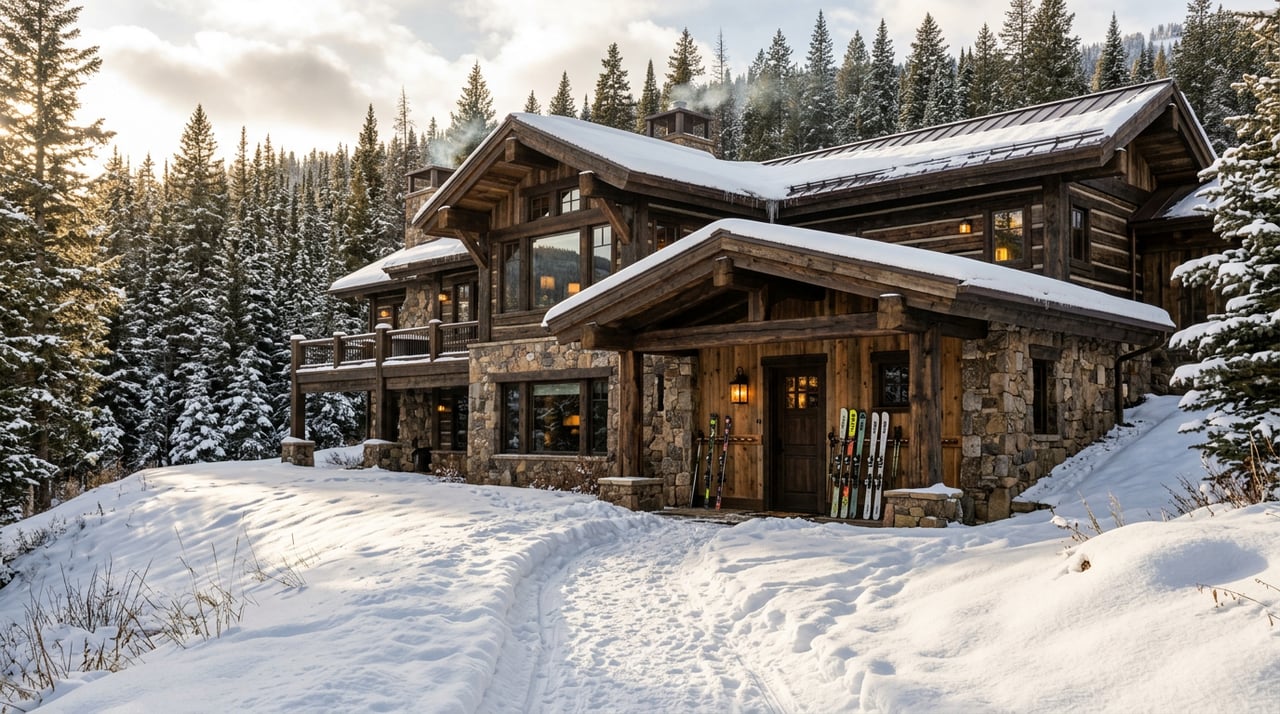
The Colony at White Pine Canyon is a gated ski-in/ski-out community in Park City spanning more than 4,600 acres, with about 90% preserved as open space. It offers direct access to Park City Mountain, plus year-round hiking, biking, and horse trails, and it is described by the community as being about 35 minutes from Salt Lake International Airport and 5 minutes from Main Street. As The Colony explains, the setting combines resort access with a strong emphasis on land, privacy, and preservation.
This is also an active residential community, not a speculative concept. According to The Colony project information, infrastructure is complete, with over 26 miles of paved roads and underground utilities, and improved lots are stubbed to the property boundary. That matters because buying a homesite here is very different from buying undeveloped land in a remote location.
What a homesite really means here
A homesite in The Colony is best understood as a fully improved parcel within a master-planned ski community. Per the community FAQs, each lot has a designated building envelope of roughly one-half acre, while the rest remains open space. Owners may build a main residence, a separate guest house, and an accessory building, and some lots allow horses.
That combination gives you meaningful flexibility. You are not simply buying land. You are buying the ability to shape how your future home sits on the property, how guest spaces function, and how the home relates to views, privacy, and ski access within the framework of the community.
Why buyers choose a homesite
For many buyers, the biggest advantage of a homesite is control. If you want your residence to reflect your priorities from the beginning, this path gives you the broadest opportunity to tailor the result. In a community where open space is central to the experience, that can be especially compelling.
A homesite may be the stronger fit if you want to:
- Design around your preferred view corridors and privacy
- Plan for a guest house or accessory structure
- Create a long-term family compound
- Shape the relationship between the home and the land
- Make architecture and site placement part of the ownership experience
The Colony’s rules support this kind of planning. The FAQ page notes there is no stated minimum or maximum size requirement for the main residence, which can offer unusual design freedom compared with more restrictive communities.
The tradeoffs of building
Control usually comes with a longer runway. The Colony requires site and house plans to go through an architectural review process, which adds a layer of coordination before construction begins. That is a normal part of protecting the long-term quality and consistency of the community, but it does mean the homesite route involves more steps than a finished-home purchase.
Financing can also work differently. As the Consumer Financial Protection Bureau explains, construction loans are typically short-term, fund building in advances, and often carry higher rates than longer-term mortgages. In practical terms, a homesite purchase often means you are managing land acquisition, planning, approvals, construction financing, and the build process before the home is ready for use.
You also need to plan for the full ownership cost profile. According to the CFPB homebuying guide, homeowners should budget for property taxes, insurance, repairs, and HOA dues, and closing costs often run 2% to 5% of the purchase price. With a homesite, the land purchase is only the first phase of total capital deployment.
A homesite can be more turnkey than expected
Not every lot starts from scratch. Some offerings blur the line between a pure land purchase and a more streamlined build path. For example, 207 White Pine Canyon is described as a 4.6-acre homesite priced at $8.95 million with fully engineered and approved Backen & Backen plans for an estate of more than 24,000 square feet.
That kind of opportunity can appeal to buyers who want the benefits of land ownership and customization, but who also want to save time on early-stage planning. In other words, a Colony homesite does not always mean starting with a blank page.
What a turnkey estate offers
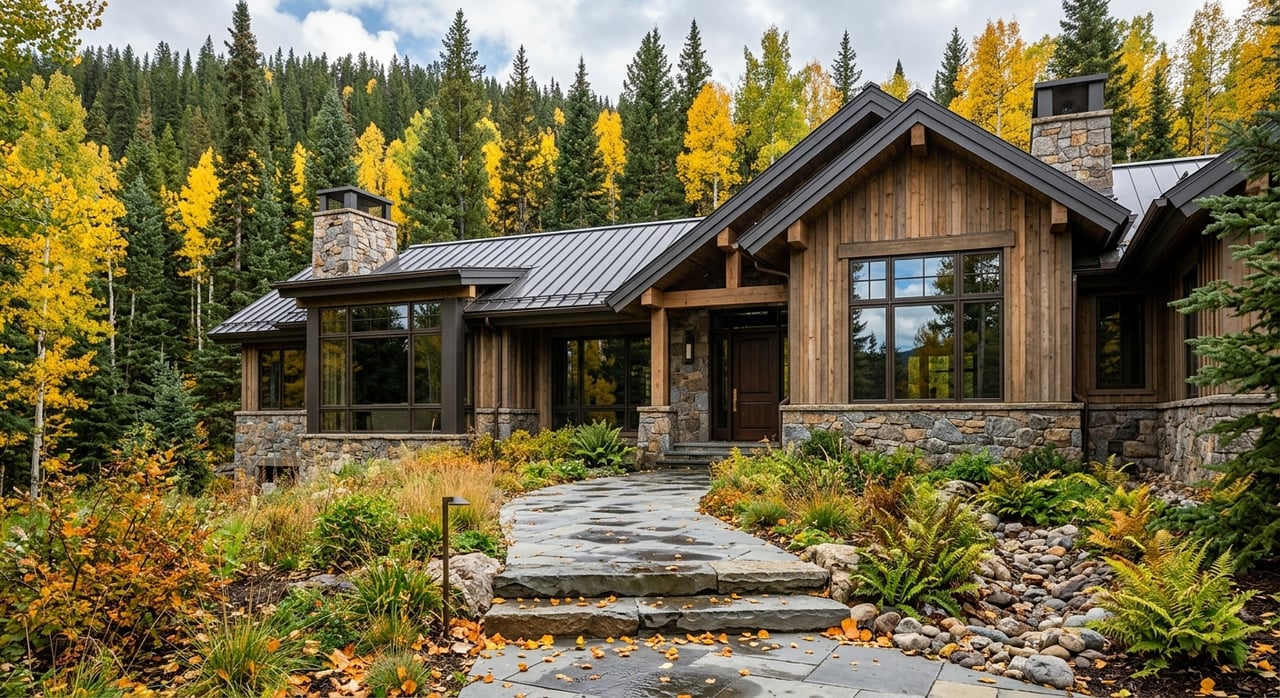
On the other side of the decision is the completed-home path. A turnkey estate means the home is already built and ready for use, which removes the design-review and construction phases from your to-do list. For buyers who value speed and certainty, this can be the simplest path into the community.
The current inventory clearly reflects that option. The custom homes page notes that 258 White Pine Canyon is complete and fully furnished, and 137 White Pine Canyon is a finished 7,609-square-foot estate. These are very different ownership experiences from a land purchase followed by a multi-stage build.
Why buyers choose turnkey
The main advantage of a completed estate is clarity. You know the floor plan, the architecture, the finishes, and the occupancy timeline before closing. That can reduce decision fatigue and make the buying process feel more straightforward.
A turnkey estate may be the better fit if you want to:
- Use the home sooner rather than later
- Avoid the architectural review and construction process
- Limit project management responsibilities
- Know your layout and finishes upfront
- Secure a polished mountain retreat with fewer unknowns
For many second-home buyers, especially those with limited ski-season windows, immediate usability carries real value. In a ski-in/ski-out setting connected to Park City Mountain’s 7,300 acres of terrain and 41 lifts, speed to enjoyment can be a major deciding factor.
The tradeoffs of turnkey
A completed estate usually means less customization. You are buying a home as it exists, rather than building around your exact preferences for site placement, guest accommodations, or architectural style. In a community where homesites can support a main residence, guest house, and accessory building, that tradeoff may matter more than it would in a conventional neighborhood.
It is also important to keep the term turnkey in perspective. Move-in ready does not mean cost-free. The CFPB notes that homeowners still need to budget for repairs, insurance, taxes, HOA dues, moving costs, furnishings, and future improvements. Turnkey mainly describes the fact that the home is ready to use right away.
Homesite vs. turnkey at a glance
If you are trying to simplify the decision, it often comes down to a few core priorities.
| Priority | Homesite | Turnkey Estate |
|---|---|---|
| Customization | Highest level of control | Limited to existing design |
| Timing | Longer process | Immediate or near-immediate use |
| Decision-making | More involved | More defined upfront |
| Capital timing | Staged over time | Concentrated at closing |
| Project management | Higher | Lower |
| Legacy compound potential | Strong | Depends on existing home |
The right answer is often less about which option is objectively better and more about what you want ownership to feel like. If your vision centers on long-term stewardship and designing a property around your family’s needs, a homesite may be the better fit. If your priority is simplicity, certainty, and fast access to the lifestyle, a completed estate may be the stronger choice.
A note on inventory and community context
The Colony website references both 274 approved single-family home sites and 286 homesites in current marketing, so it is best not to anchor your decision to one exact lot count without confirming the latest details with the sales team. What is clear from the community website and project page is that this remains a highly limited, actively evolving community with both land and completed-home opportunities.
That is part of what makes the decision so important. You are not just choosing between land and a house. You are choosing how you want to enter one of Park City’s most distinctive ski-access communities and what kind of ownership experience you want from day one.
Which path is right for you?
A homesite is usually the better match if you want to create a legacy property with a highly personal design, flexible guest accommodations, and a layout shaped around the land. A turnkey estate is usually the better match if you want a finished retreat, a more predictable process, and the ability to start using the property without waiting through design and construction.
In The Colony, both paths are elevated versions of their category. Homesites are fully improved within a mature infrastructure network, and completed estates offer immediate access to a community defined by open space, ski connectivity, and privacy. The best decision depends on whether you are optimizing for design freedom or immediate enjoyment.
If you want discreet guidance on available homesites, completed estates, or opportunities that may not be broadly marketed, the team at The Colony at WPC can help you explore the path that best aligns with your goals.
FAQs
What does a homesite purchase in The Colony include?
- A homesite in The Colony is an improved lot within a master-planned community, with utilities stubbed to the boundary and a designated building envelope of roughly one-half acre, according to the community FAQs.
What is the difference between a homesite and a turnkey estate in The Colony?
- A homesite gives you the ability to design and build a residence, while a turnkey estate is already completed and ready for use, which can shorten your timeline and reduce project management.
Are homesites in The Colony raw land?
- No. The Colony states that infrastructure is complete, with paved roads, underground utilities, and improved lots, so these parcels are not raw land in the typical sense.
Can you build guest accommodations on a homesite in The Colony?
- Yes. The Colony FAQs say owners may build a main residence, a separate guest house, and an accessory building, subject to community rules and review.
Is a turnkey estate in The Colony less expensive to own over time?
- Not necessarily. A turnkey estate may reduce the complexity of getting into the home, but homeowners still need to budget for taxes, insurance, repairs, HOA dues, and other ongoing costs.
Is The Colony a good fit if you want to use the property right away?
- If immediate use is your top priority, a completed estate is generally the stronger option because it avoids the design-review and construction phases required with a homesite purchase.